
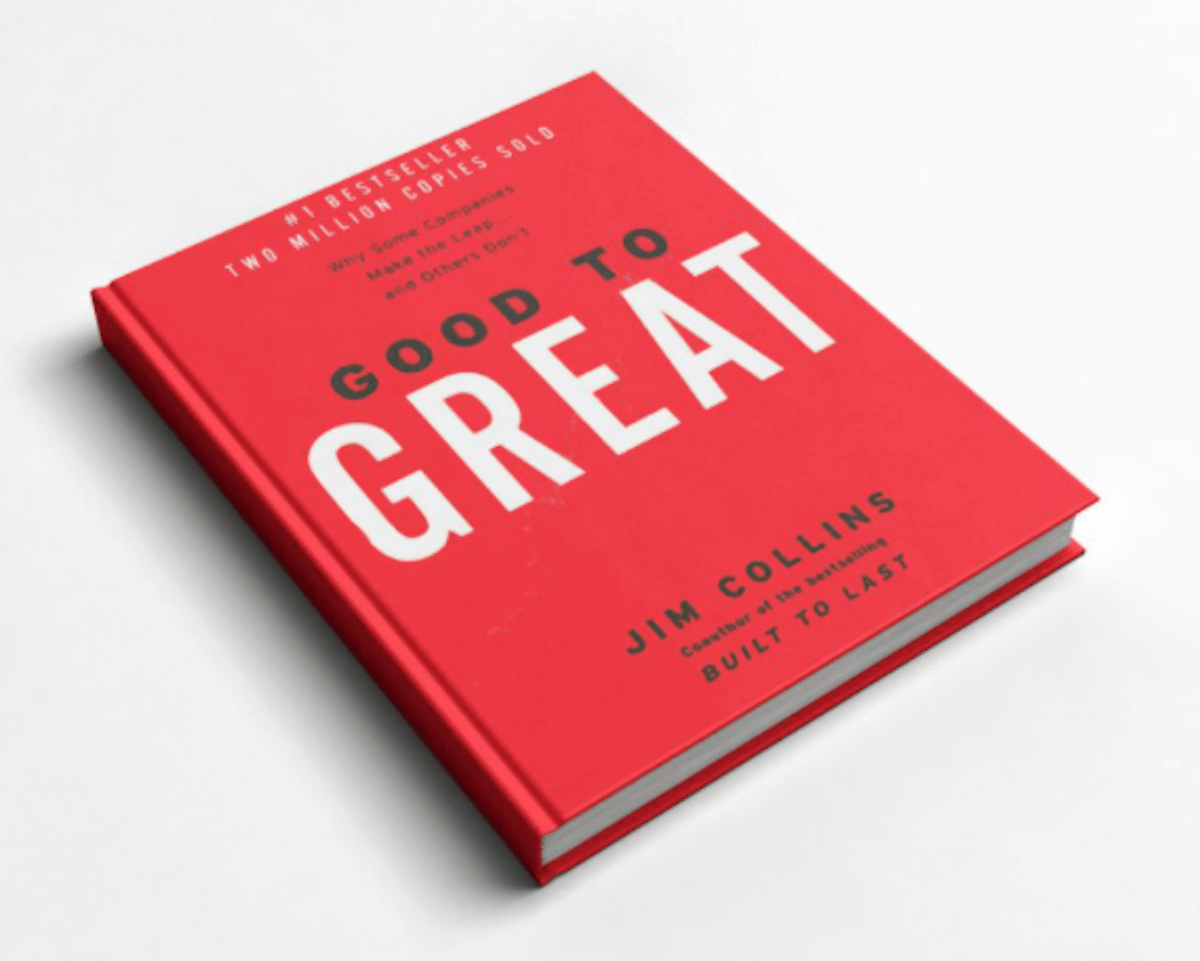
Good to Great: Why Some Companies Make the Leap… And Others Don’t is a management book by Jim Collins. It focuses on how companies change and evolve, and presents strategies to ensure that your company makes the leap to success correctly.
A 3 Minute Summary of the 15 Core Lessons
#1 Focus on What You’re Best At One of Collins’ key takeaways is that your company should only focus on the services or products it can best produce. Spending time on subpar services or products will only spread your efforts thin and possibly create unsatisfied customers. He recommends that you focus on what you’re best at not only having a higher return on investment but also becoming known in your market or niche as the best there is.
#2 Companies Are Like Busses One of Collins’ more memorable metaphors is that building a company is just like driving a bus. The driver is arguably the most important, as he is responsible for deciding the direction of the bus. But all the passengers also matter; you need to make sure that each of your employees is in the correct spot and doing the right work to make the most of their strengths.
#3 Hedgehog Concept Collins takes his business metaphors one step further and compares foxes to hedgehogs. In his book, he describes hedgehogs as slower but more focused and simpler in their methods of attack. This is something you should emulate. Your business plan should revolve around something you are both passionate about and can be the best at, plus something that can be effective in making you money.
#4 Be Agile About Change Good companies that can stand the test of time will be able to change with the market and with shifting consumer interests. It’s not worthwhile to develop simple but temporary solutions that don’t cover the needs of your customers or service users for the long term. Instead, it’s often better to make more dramatic changes for more cost-effective action in the long run, even if it is initially more expensive.
#5 Flywheel and Consistency Collins emphasizes the importance of consistency in his book. It’s more effective, he argues, to reorganize your company or improve your business through incremental efforts that are the same each day. Making smaller efforts consistently over time is often more doable and maintainable than trying to push dramatic change over a short period.
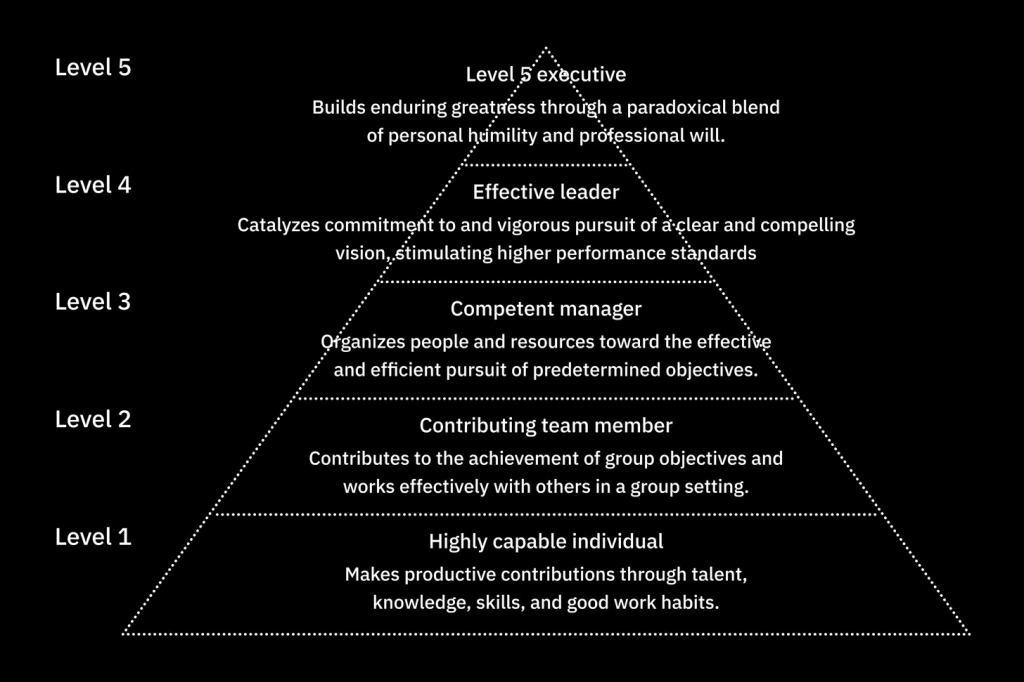
#6 5 Levels of leadership in his experience, Collins finds that great leaders are a “Level 5 Executive” on a ladder of 5 steps. Leaders can be anywhere from Level 1, a highly capable individual, to Level 2, a contributing team member, to Level 3, a competent manager, to Level 4, an effective leader, to Level 5. You should always try to be a Level 5 leader, as this is a staple of successful companies.
#7 Focus on Brutal Facts It doesn’t pay or help your company to be ignorant of the truth of your market situation or emerging trends. Collins emphasizes four practices you can engage in to maximize your awareness of the situation: lead with questions instead of answers, engage in dialogue and debate rather than coercion, conduct your business autopsies without assigning blame, and build “red flag mechanisms” that can alert you to problems or information you can’t afford to ignore.
#8 Make a Culture of Discipline You and your team must be disciplined to see your business plans through and receive maximum success. Collins points out that this is not the same as forcing your company to operate under a tyrannical style of leadership. Instead, afford your team members some latitude with the understanding that discipline is necessary for proper team cohesion.
#9 Apply Technology Smartly Collins advocates for using technology intelligently. In his examples, he says that companies should avoid technological fads to avoid sinking time and money into unnecessary developments. Instead, only incorporate new technology into your business plan when it will benefit your momentum and improve your results.
#10 The Flywheel Effect One of the other major metaphors of the book describes “The Flywheel Effect”. This effect describes the small or humble beginnings of a company that may eventually lead to breaking the results. As many smaller efforts build up and start the titular flywheel’s progress, momentum becomes unstoppable and excellent results are inevitable.
#11 Positive Momentum Related to the flywheel effect, Collins describes the importance of positive momentum. Taking actions or making business decisions that reaffirm your company’s core strengths for competencies will improve the momentum. You should also focus on the human element of this idea, improving the efforts and success of your workers. Positive momentum forms a helpful feedback loop, making it easier to attain more positive momentum as you go along.
#12 Spend Time with Worthwhile People Collins also points out that spending your time at work with people you do not love or respect will result in a subpar experience and prevent you from achieving a great life. Surrounding yourself with people who are worth your time is critical – not just for your business’s success but also for your fulfilment.
#13 Level 5 Leaders Channel Ego Into the Company All great business leaders need to have some level of ego or ambition. But proper Level 5 leaders will channel that you go into their institution or company rather than allowing it to affect their personal decisions or attitude. This is part of the reason why finding excellent Level 5 leaders can be difficult; it’s easy for any executive to fall into this trap.
#14 Who, Then What You should always start a business venture with the right people, even if you have a good idea already. Starting your company without the right people “on the bus” can lead to a terrible return on investment or company collapse.
#15 Keep Looking, Don’t Just HireYou should put a lot of effort into finding the right people for your major positions. It won’t do your company or business venture any good to hire inappropriate candidates, especially for your leadership positions. It’s always worthwhile to take extra time to find the right folks for your bus than it is to settle.
Top 10 Quotes from Good to Great
- “Greatness is not a function of circumstance. Greatness, it turns out, is largely a matter of conscious choice, and discipline.”
- “The purpose of bureaucracy is to compensate for incompetence and lack of discipline.”
- “Great vision without great people is irrelevant.”
- “A company should limit its growth based on its ability to attract enough of the right people.”
- “For, in the end, it is impossible to have a great life unless it is a meaningful life. And it is very difficult to have a meaningful life without meaningful work.”
- “By definition, it is not possible for everyone to be above the average.”
- “Faith in the endgame helps you live through the months or years of buildup.”
- “The moment you feel the need to tightly manage someone, you’ve made a hiring mistake.”
- “What separates people, Stockdale taught me, is not the presence or absence of difficulty, but how they deal with the inevitable difficulties of life.”
- “Mediocrity results first and foremost from management failure, not technological failure.
Every good-to-great company had a Level 5 leader. Furthermore, the absence of Level 5 leadership was a consistent pattern in the comparison companies.
Level 5 refers to a five-level hierarchy of executive capabilities:
- Level 1: A highly capable individual who makes productive contributions through talent, knowledge, skills, and good work habits
- Level 2: A contributing team member who contributes individual capabilities to the achievement of group objectives and works effectively with others in a group setting
- Level 3: A competent manager who organizes people and resources for the effective and efficient pursuit of predetermined objectives
- Level 4: An effective leader catalyzes commitment to and vigorous pursuit of a clear and compelling vision, stimulating higher performance standards
- Level 5: A level 5 executive builds enduring greatness through a paradoxical blend of personal humility and professional will.
Get new content delivered directly to your inbox.
 Bedroom 2 Boardroom 🚀