
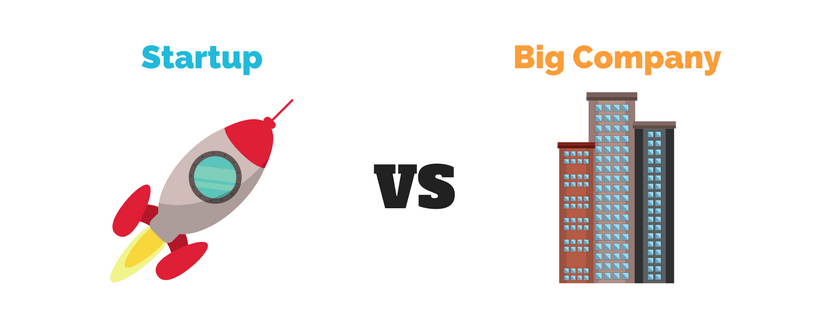
The biggest slice of your life goes to work. Not only is it five out of every seven days, what happens during those five days affects how you feel the other two. Choosing your environment is one of the highest ROI decisions you can make.
Maximising learning vs. money
Garry Tan broke it down beautiful, “you should either be learning or earning, ideally both”. Early in your career, there’s an inevitable trade-off. Why? First, when you have a lot to learn in a role, you’re typically under-qualified, at least on paper. This gets reflected in your pay.
Second, the size of the company is correlated with the ability to pay top £££. Startups rarely outcompete big companies on cash. The expected value of working in big tech eclipses startups given the high guaranteed salary, and the likelihood of equity appreciation. On the topic of equity, this is preferred in the US where it is more common for companies to be sold and US employees appear to become millionaires overnight, compared to the UK where these events happen less frequently. If you’re maximising money, it’s hard to beat big tech. However, maximising money early in your career can shortchange your lifetime earning potential (unless you are going into high paying careers such as Private Equity, Law, Investment banking etc…). Money today is tied to a particular employer, whereas learning today can be taken with you wherever you go. By learning, you are investing in your future self and growing your optionality.
There’s a fallacy that you “learn more” at a bigger company. It’s worth clarifying what you seek to learn. Do you want to learn to do, or manage stakeholders? From my experience startups are better for the former, big companies are better for the latter.
When it comes to “doing the work”, startups excel as there are more opportunities than people to fill them, and more attempts per opportunity given the faster pace of operating.
Perhaps the biggest downside of being at a startup is working extremely hard to build someone else’s dreams. But getting good at the craft prepares you to start your own.
When it comes to “managing stakeholders”, big companies excel here. There are simply more people to align with at a higher frequency. And if you suck at it, you will know.
Talent, opportunity, risk
The density of talent around you sets the bar for how you should perform. The opportunity to pursue new ideas motivates you to come up with new ideas. Startups tend to index higher on both counts. The density of talent necessarily declines as a company grows, along with the desire to embrace the new, although some teams avoid this trend. This is especially important to get right early on in your career when you are truly a blank slate. Your first few jobs shape your habits, skills and outlook.
It’s also important to distinguish between job risk vs. career risk. A job can be risky because it may not exist or change dramatically in the future. But if the risky job accelerates your learning, your long-term career prospects get brighter.
Borrowed credibility / rep
A common reason why people work for a big brand name is because of the credibility it adds to their resume. Without credibility, it’s hard to draw attention in a noisy world. The best way to bootstrap credibility is to borrow credibility by association: going to a well-known university (think Russel Group), working at a brand name company (think FAANG if you’re in tech, Magic Circle if you’re in law, Tier 1 institutions if you’re in finance), getting sponsored by a respected person. You only need to borrow once or twice before you’re off to the races based on your own merits. It’s tempting to continue collecting stripes of credibility, but in reality, brand names become less important with every passing year in which you have an opportunity to prove you’re different from the thousands who have done the same thing. I’d rather someone who came from a lesser well-known graduate school but has done some cool things in the first 2/3 years of their career compared to the Oxbridge grad who has not, but that’s me. I have a bias towards the underdog who is willing to work hard.
Know thyself
What is your appetite for structure, stability and risk? Your tolerance for BS? Your hunger for freedom? If stability is crucial for you, the lower freedom and higher BS of a bigger company is likely worth it. Choosing the right type of company is a gift to your future self with time well spent.
Get new content delivered directly to your inbox.
 Bedroom 2 Boardroom 🚀