
The hardest part of sales is creating urgency. Not true, the other elements are tricky too, however, most of the times your lead/prospect does not need to buy your solution right now. Now and again you will get those ‘tap ins’ you know, those deals which were sold before the conversation with you the sales rep and you convert in 1 call and your teammates view you as Alec Baldwin from Glengarry Glen Ross.
The reality is this will happen so infrequently. What will happen more commonly is your buyer will need the solution but not be in rush to change how they are currently operating by buying your solution. What happens if you fail to execute during the time you have with them is what I refer to as the law of diminishing interest which states there is a direct relationship between a buyers interest and likelihood to buy.
So, during your demo and slightly after the interest is at its highest point so is the likelihood of your buyer buying and the likelihood decreasing.
All of that to say, the best time to ensure the sale is on the call or shortly thereafter. The first step to ensure this is done is to create a structure for the call so both you and the buyer know what to expect. You can find a loose framework below:
- Preliminaries
- Investigate
- Demonstrating Capability
- Obtaining commitment
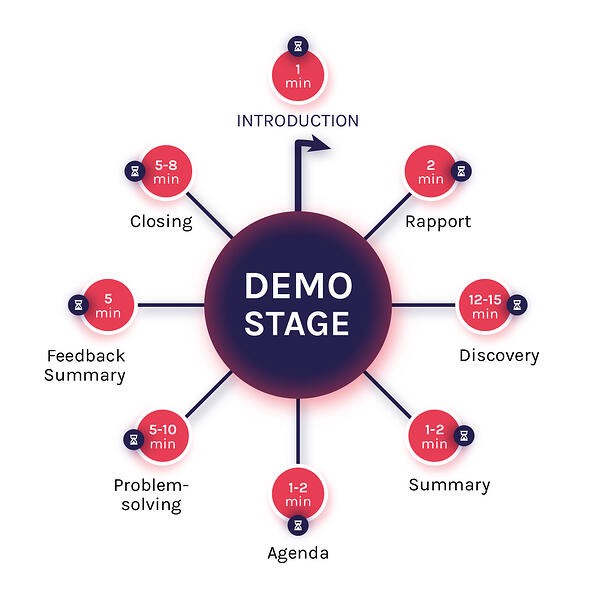
My favourite way to do this is to provide a structure for the call and outline that by the end of the call we should be ready to proceed and ask the prospect ‘how does this sound’? Often they are happy to say (out of politeness)
Then what? We then begin/continue rapport building with the buyer, introducing yourself, getting to know him /her and in essence, the crux of it is creating a good first impression. You only get 1 shot to make a first impression and sadly they count for a lot so we must correctly present ourselves. Remember, people buy from people. But, they also buy from people they like, not to say you should compromise who you are to be liked and for the sale but you should be charming, easy to get along with, empathetic, and attentively listen and has some level of communication skills
A sidenote — you build rapport at the beginning of the call and the aim is to ensure it is constantly injected throughout the remaining parts of the sales demo to establish a human and trusting relationship.
Now we investigate. We must understand whom we are speaking to, is this the budget holder, decision-maker or the junior team member who has been sent on an information collection task & structure our call accordingly. By that I mean there is very little point going in bullish if it is the latter who does not have the authority to pay or needs to confer with a fellow decision-maker.
We need to understand the factors and external pressures that led to this problem occurring and was the tipping point that leads to the buyer booking a call. Was it an event, an individual, a timeframe they are working towards? Whatever it is you need to find out and the only way you can do is to ask questions early on in your call. The best way to do so is to ask questions to understand more about the buyer’s current situation, what problems they facing, why they are looking for this solution, what they have tried in the past, how they found it etc…
Once we have this information we anchor our responses to the above. The buyer may tell us of a time constraint they are dealing with and stakeholders who put a battery in their back and we should be able to outline that the best time to kick the process off is now because we can move quickly which allows the company and the stakeholder to put their mind at rest and focus on other things, for example.
Demonstrating Capability
In most cases, this will be your product demonstration or relevant case studies outlining how you have helped business similar to the buyer and what transformational impact it had on their business post-sale. In the demonstration aim to have this as personal as possible, outline the support you provide for the buyer to make their transition frictionless and how easy it is for them to start the process today, in a matter of moments.
Obtaining commitment
Here is an important element that often gets overlooks. One of the main things we are looking for to finalise our sales call is a clear acute understanding of what the next steps are for ourselves the seller and the buyer. What we are looking for is any signs of advancement which can be loosely defined as any actions to be completed by the buyer that will bring us closer to the close of the deal. One thing I often see junior but not exclusively just junior reps failing to do is assuming the close, which is odd. You have a kick-ass product (hopefully), they have taken time out of their calendar, you have given a great demonstration/call, why would they not buy if they are the decision-maker or budget holder?
Once you have assumed the sales and the buyer lets you know that they are not the decision-maker or in a position to buy then, your focus should transition to including the other stakeholders in the next steps and ensuring this can be done ASAP. Reps tend to agree on the next steps “in a week” which is simply in most cases too far in the future. Why? This gives the buyer time to get cold feet, for other things in their life to seem more important than your solution and worse case, you could lose to a competitor who does what you should have done in the demo and rep the rewards for doing so. How far in the future you should arrange a follow-up call with the agreed understanding that purchase or another advancement will occur depends on a few variables, a good rule of thumbs is for smaller sales 24–48 and larger sales perhaps a week.
Ensure you have the following done:
- The event scheduled before the call ends with all relevant stakeholders invited
- Send a follow-up email answering all questions the buyer posed, your valuation proportion, what the next steps are, how easy it is to kick the process off and referring back to the reason that this meeting became important
Last but not least, ensure you abide by the contact strategy ensuring you add value with every interaction.
 Bedroom 2 Boardroom 🚀